
Salt-free water conditioners in Peoria run $1,000–$2,500 installed; scheduled salt delivery for conventional softeners runs a few dollars per bag plus a stop fee. On the city's 9–30 grain blend, salt-based softening outperforms conditioning, but conditioners fit real needs, and delivery removes softening's only chore.
The honest comparison, and how delivery works.
Salt-free conditioning, honestly
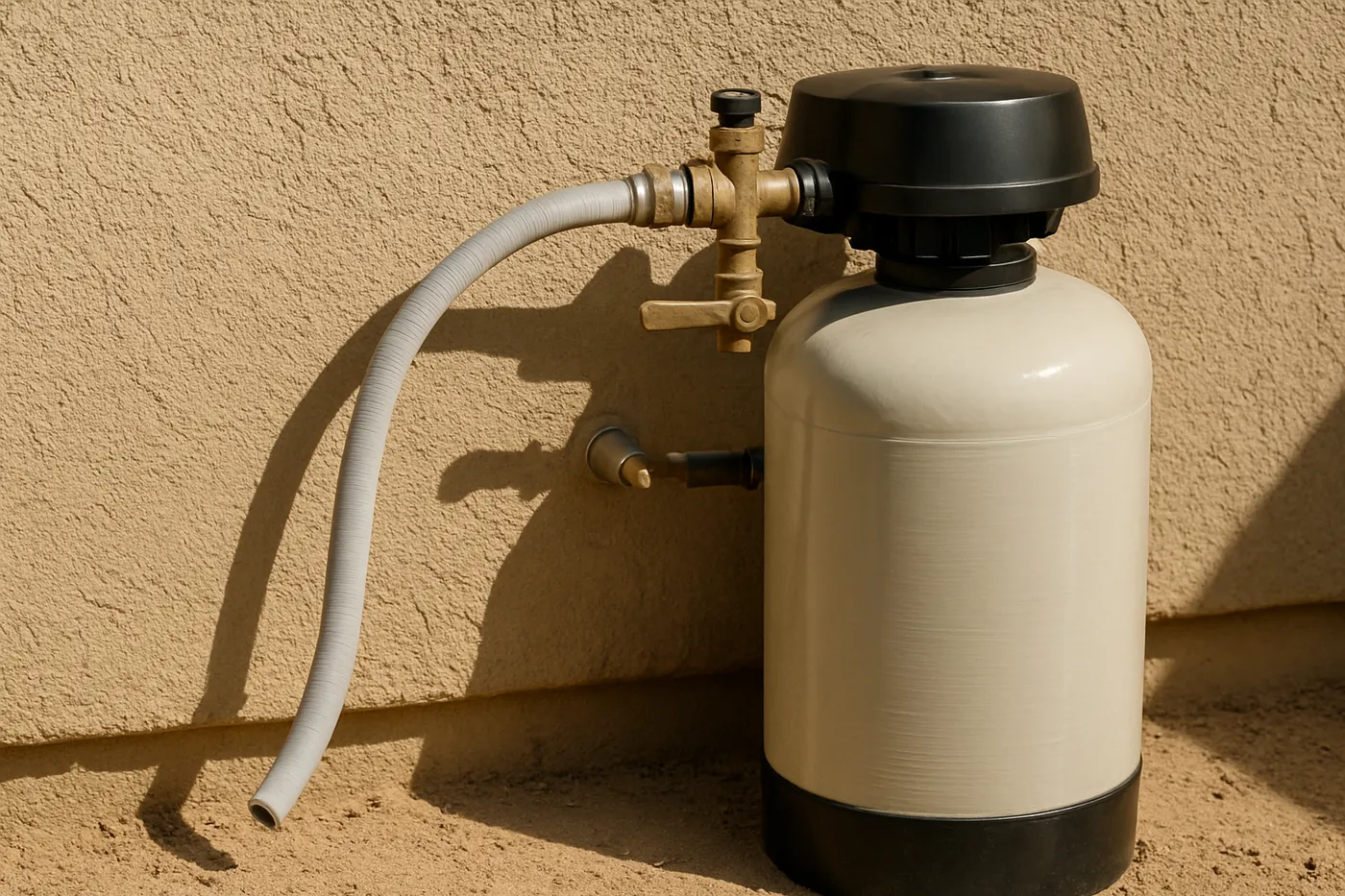
Template-assisted crystallization (TAC) converts dissolved minerals into microscopic crystals that flow through rather than sticking as scale. Independent testing supports real scale reduction. What it doesn't do is remove hardness: soap behavior, spotting, and skin feel change only modestly. On Peoria's harder streets we'll tell you plainly: if you want the full result, soften; if you want low-maintenance scale protection, condition.
| Salt-based softener | Salt-free conditioner | |
|---|---|---|
| Removes hardness | Yes | No: conditions it |
| Scale protection | Excellent | Good |
| Soap / spotting / feel | Full improvement | Modest |
| Maintenance | Salt every 4–8 weeks | Near zero |
| Water use | Regeneration cycles | None |

How delivery schedules usually work
Delivery matters most in Sun City, Sun City West, and Youngtown, the communities where hauling a 40-pound bag from the store is least welcome. Ask the specialist which parts of the service area they cover, from Vistancia to Waddell. A good schedule follows your actual usage: a two-person household on moderately hard water might need a stop every eighth week, a busy family on a hard street every fourth. The interval should follow what the driver finds in your brine tank, so you're never paying for salt you didn't need or running out between stops.
Can a conditioner and delivery work together?
They're alternatives, not partners. A salt-free conditioner has no brine tank to fill, so delivery applies only to conventional softening. That's actually the cleanest way to frame the choice: if the idea of never buying salt again is what draws you to salt-free, priced over five years, a softener plus scheduled delivery often costs about the same and delivers the full result. Ask the specialist to run both numbers for your household at the estimate.
What a good delivery visit includes
A good stop is a mini service call, not a doorstep drop: the driver pours the bags, levels the brine tank, probes for the salt bridges our dry climate builds, confirms the unit is cycling on schedule, and flags anything, such as a weeping fitting or a tired valve, before it becomes a weekend emergency. Homes on a delivery schedule can catch problems earlier than homeowners hauling their own bags, simply because trained eyes are on the equipment every month or two. Ask whether the specialist runs regular routes or books stops on demand.
Salt delivery: softening without the hauling
A 40-pound bag is the least-loved part of owning a softener, especially for owners in Sun City and Sun City West. A good delivery service works to your usage schedule, fills the tank, breaks any salt bridge forming in our dry air, and flags anything on the unit that looks off before it becomes a service call.
When we recommend conditioning over a full water softener installation
Three honest cases: streets on the canal-heavy end of the blend where measured hardness lands near the bottom of the city's range; households where nobody wants to think about salt, ever; and homes where scale protection for the water heater is the whole goal. Outside those, a full water softener installation delivers more, and a specialist who installs both should let the recommendation follow your tap test, not a commission sheet.
Frequently asked questions
Does a salt-free conditioner actually work?
It reduces scale formation (legitimately) by converting minerals to crystals that resist sticking. It does not remove hardness: lathering, spotting, and film improve less than with true softening. On 16-grain water we're honest that salt-based wins on results.
Who should choose salt-free?
Households that want zero salt handling and zero regeneration water, lighter-hardness streets on the canal-heavy blend, and anyone whose priority is scale protection rather than the full soft-water feel.
How does salt delivery work?
A good delivery service carries the bags, fills the brine tank, checks for bridging, and eyeballs the system while there, on a schedule matched to your usage, typically every 4-8 weeks.
How much does delivery cost?
Usually priced by bag count plus a small stop fee; most homes land around the cost of a takeout lunch per month. Ask whether you can cancel anytime.
Get a Peoria estimate
Tell us what you're seeing at your fixtures, and the local specialist who calls back can recommend a system sized to your home. A local specialist who serves Peoria will call you back.